

Transmission · Portrait of the Month
The Happiness of Teaching
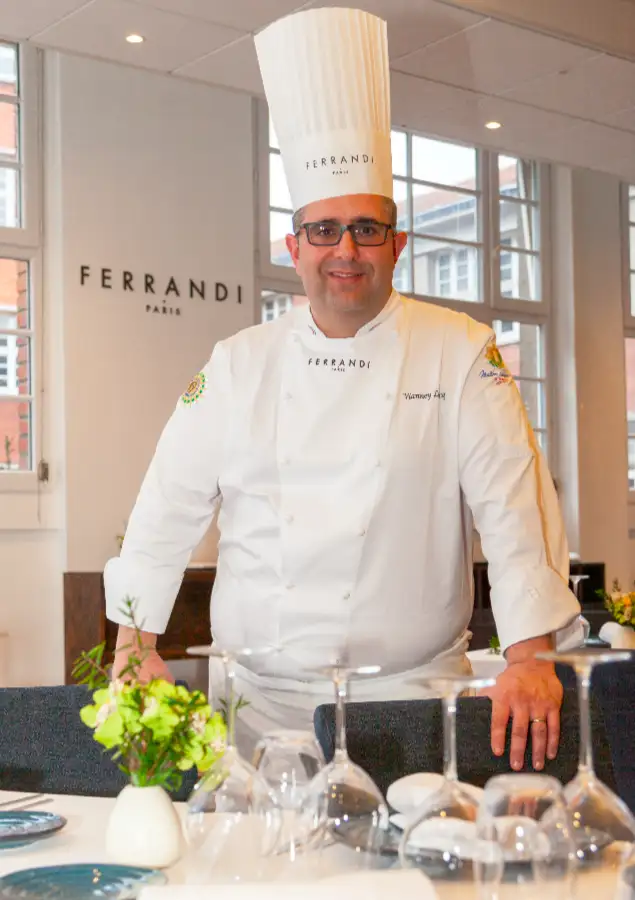
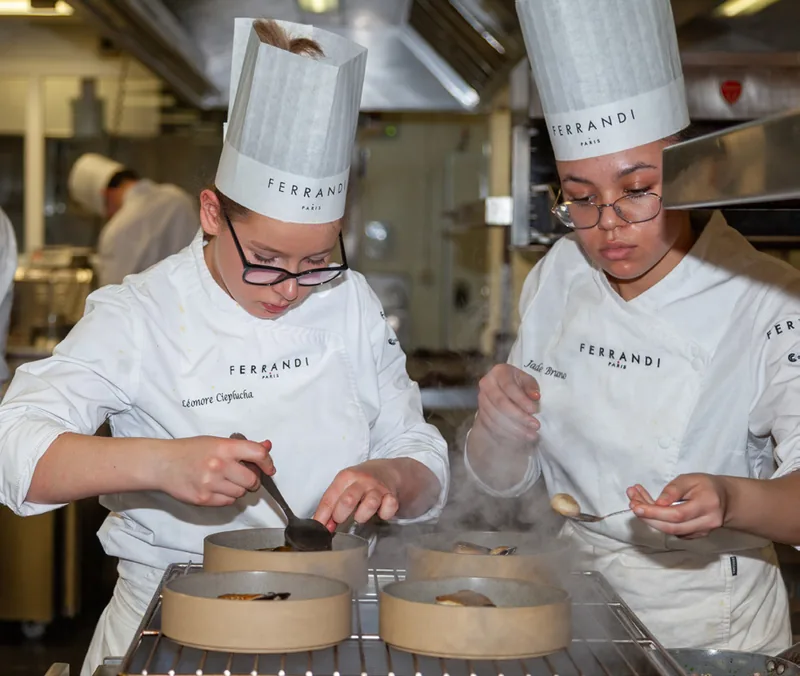
Fifteen years of cooking teaching and not a shadow of a ras-le-bol, of the slightest fatigue. It's even the opposite: Vianney Lecocq meets his students each morning at the prestigious Ferrandi Paris school with obvious pleasure. This forty-year-old jovial and benevolent, but also rigorous and demanding, trains young people to cook. These are the clerks, the party leaders and maybe the chefs of tomorrow. To each one, he gives his chance, and everyone is lucky to have that teacher.
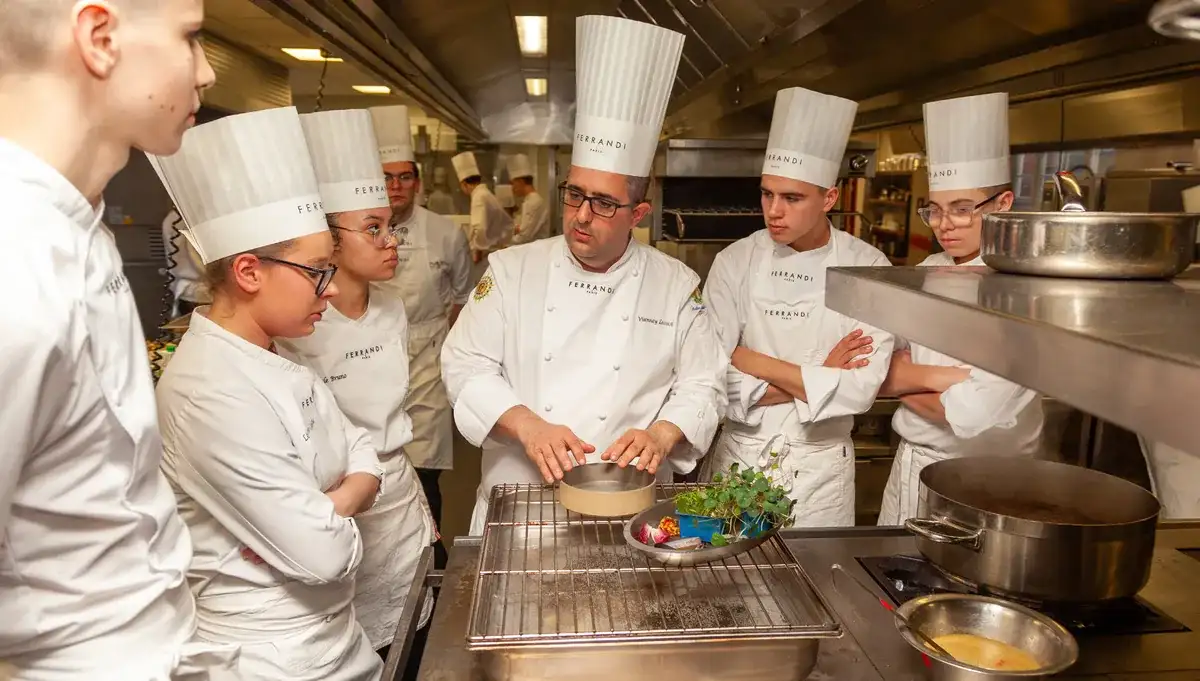
He teaches 45 kids he doesn't miss a birthday. Not even their party. Their surname, first name, date of birth and telephone number scroll through his cell phone. Each has its own personal details. Exchanges are permanent, the link is strong. Vianney Lecocq, teacher trainer in Ferrandi since 2020, is, that's little to say, involved in his profession:
« When I was a chef, I always wanted to be close to the apprentices. I have received from my teachers of learning a lot of attention, consideration. It is important to me and it is a duty to give young people their chance. », says this Francilian, born in 1981 in Trappes (Yvelines). Today he teaches cooking and culinary technology to three classes of professional bac, each about fifteen students. They come from 3rd, from all over France, Brittany, Bouches-du-Rhône, Charente-Maritime or Guadeloupe. « This geographical diversity proves Ferrandi's reputation »proclaim this father of three children... whose eldest has just joined the school of the street of the Abbey Gregory in bachelor's.
Trust, example, transmission
The teacher with a rare first name – Vianney was originally the last name of the parish priest of Ars, village of Ain, who, in XIXe He was known for his zeal and empathic influence on his parishioners... – admits, without detours, but without flattering, 100% success at the baccalaureate of his students. His method? « I'm trying to give these kids what I got. Do not devalue them. Some are passionate, others... less. Here, it is up to us, trainers, to take over, to accompany them. Three values are essential: confidence, exemplaryity and transmission », explains the person who honors his first name.
Vianney Lecocq doesn't hide, he is « paternalist » with her flocks. Each morning begins with a breakfast at 7:30 a.m. to discuss the program and set the goals for the day. His teaching is divided between cooking, technology, but also, he insists, to know-how. The latter is essential: « There is no formal course of being, but it is a discipline of every moment. Being presentable, polite, punctual, attentive to others... It's part of our life. » During their alternation in business 15 days a month, he remains in constant contact with them: « I am the link between the young person and the company. »
Student at Tecomah School
Little Vianney grew up in Île-de-France between a mother cook in a crèche and a father employed at Renault. Meals bring together the family around roast chicken, burgundy beef, blanquette... and his parents grow a plot within family gardens: « I used to trifoul the earth and harvest the vegetables that embellished these dog food, of real sharing. »
If he starts with the making of cakes, Vianney moves towards the kitchen at the end of 3rd, then joins the Tecomah school in Jouy-en-Josas for a BEP-CAP. He admits that, at that time, he was somewhat turbulent, and blessed Olga, his wife, who met in fourth class!, who channeled him, stabilized him and with whom he had three children since. In alternation at the restaurant La Fontaine in Montigny-le-Bretonneux, the young Vianney learns the basics of cooking and, despite an intense rhythm, enjoys it.
There he is. He continues with a pro baccalaureate, still in Tecomah, « a little the little sister of Ferrandi Paris, for her selection, her extraordinary teaching team », he says. There he made his alternation at the Trianon Palace in Versailles, under the leadership of Benoist Rambaud, « a very, very good, available leader, close to his teams ». In 2001, he obtained his professional baccalaureate and integrated the Lenôtre production lab in Pleasure. He works mainly in salt, but, when he comes up to the block, in the evening he gives a hand in pastry. In 2002, Vianney obtained, as a free candidate, his CAP pastry, chocolate, confectionery and ice cream. A fine example for his future students.
He worked at Lenôtre for two years, then at various traditional restaurants before joining, as party chef, the executive club tables at Sodexo, then at Elior where he became chef.
Teacher at Tecomah School
And, of course, young chef Vianney considers it an imperative, and a pleasure, to take apprentices alternately via Tecomah. One day in 2010, the trainer of Tecomah who follows one of these young people announces his retirement at Vianney Lecocq and entrusts him with his wish that the young leader succeed him. Vianney is not close to forgetting that day: « What an amazing gift! But I was 28 years old, I didn't feel strong enough, experienced enough and didn't think I had enough knowledge! »
He nevertheless applied to Tecomah... The only risk is not to be taken. Bingo! Vianney Lecocq made his first comeback as a teacher trainer in Tecomah in September 2010. After ten years of accomplishment within an excellent working atmosphere. « At first I received a lot of help from the teaching team, then it was constructive, enriching and enjoyable years. We even had a small educational garden and a henhouse! », remembers this fan of Houdan chickens, one of the oldest French races. The buckle was very close, with brilliance.

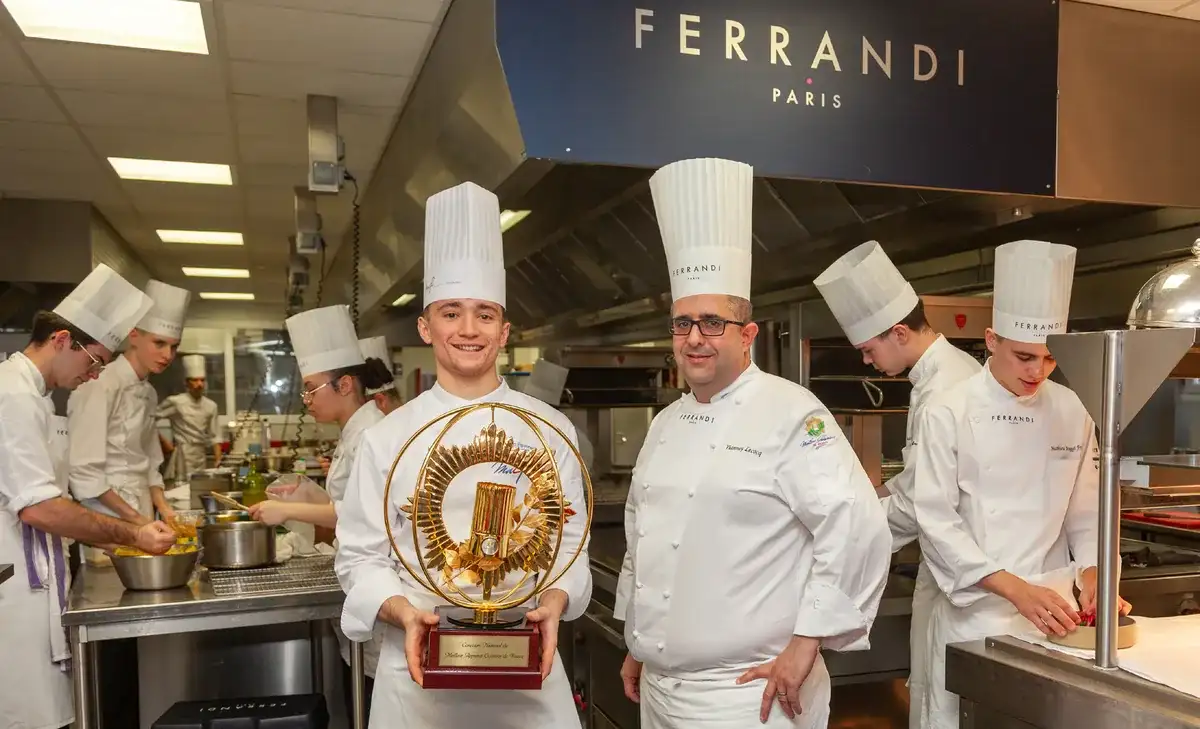
The prestigious Ferrandi Paris School
In 2020, when the Jouy-en-Josas campus was closed, Vianney Lecocq joined Ferrandi School in Paris. At the request of the then director, Bruno de Monte (now Managing Director of Médéric), he joined the event department of the famous school: « I loved it! Managing competitions, fairs and numerous internal and external events was exciting. That's where I met with Les Cuisiniers de France and I enjoyed working with this association. »
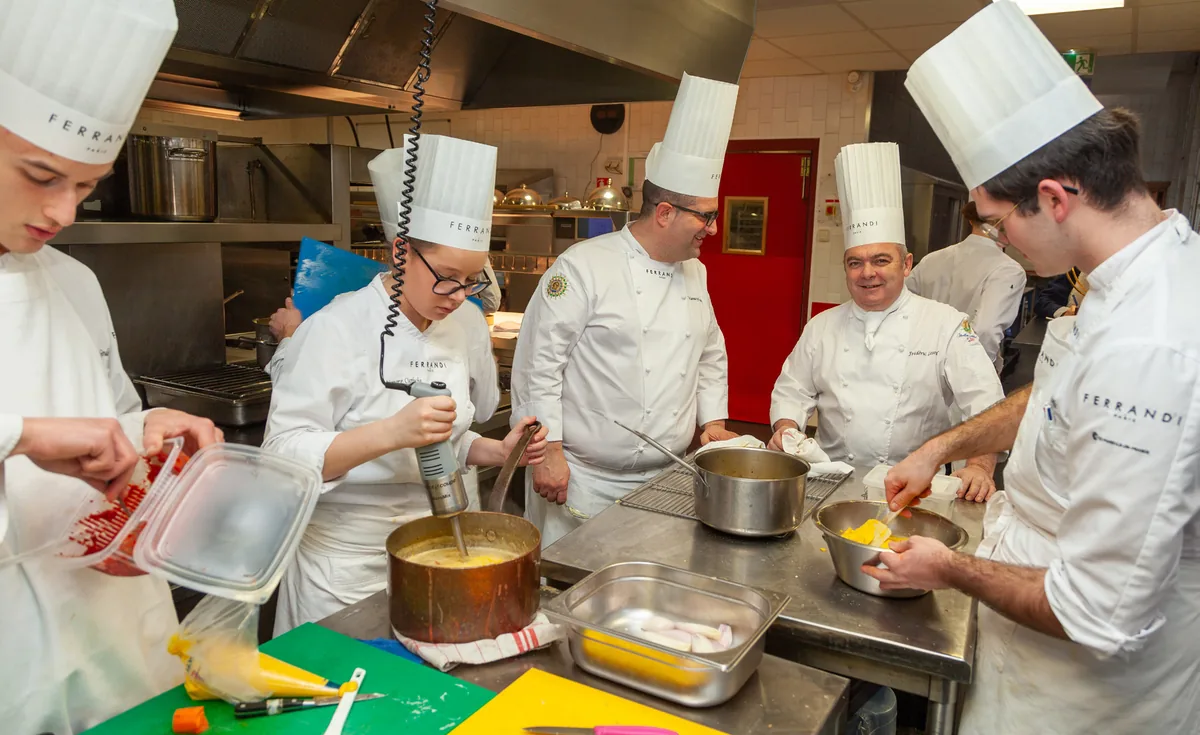
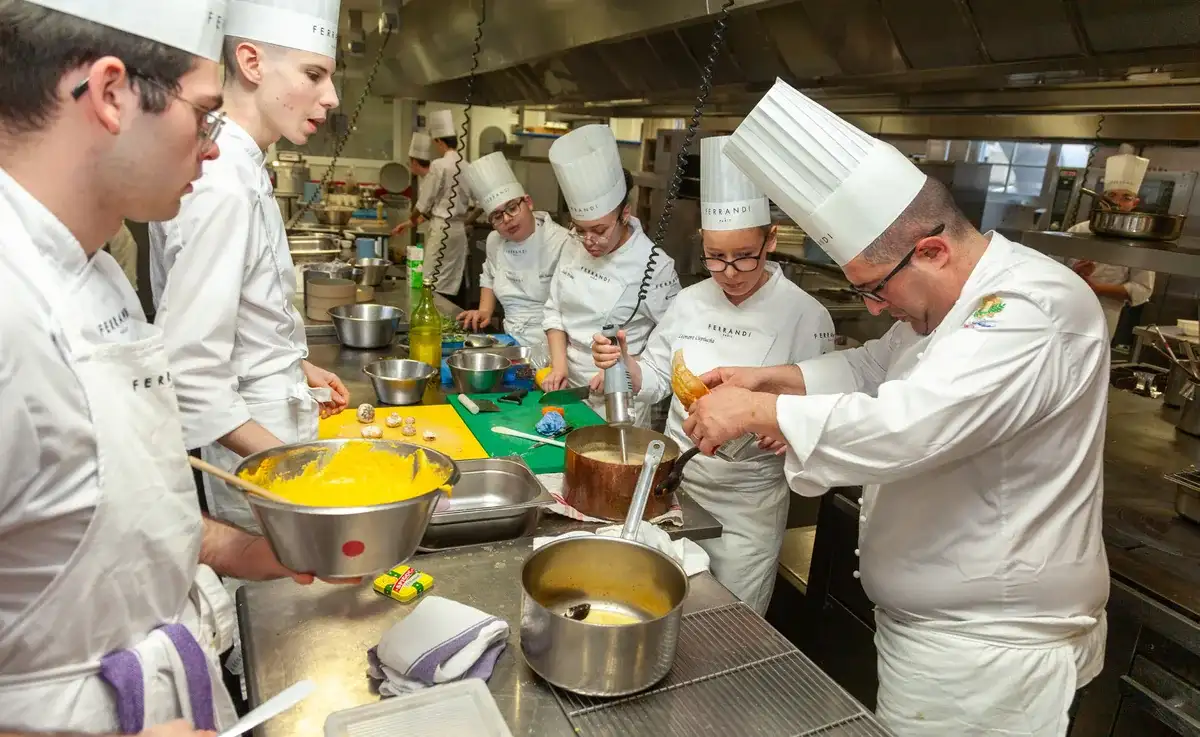
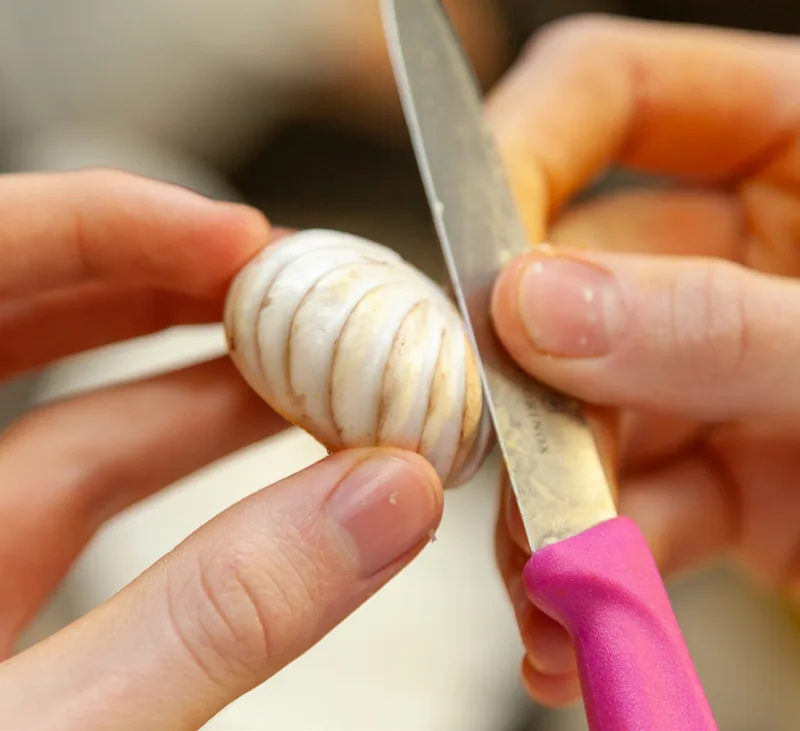
But the contact with these young people he knows how to tame, guide and instruct him too much. This teacher resumed his role as trainer a year later. To stay away from him. From the beginning of the classes, Vianney Lecocq fixed a framework: one time to work, another time to speed up, to improve, not to mention breaks to relax or even laugh. « I'm getting to their level. The notes are not too interesting. Important is the acquisition of knowledge, products is very important, and gestures. Cuts, prepare a meat, dress a fish, master a cooking including processing the product », explains this teacher who considers himself the relay between historical know-how and that of tomorrow.
He laughs: « Kid, school, the less I went, the better! Today, I come every day with great pleasure! »

A passion job
Aware of the problems of recruiting the catering world, Vianney Lecocq asks about today's youth: « The rigour given to them in Ferrandi, know-how and know-how, prepares them well for a first position. But their expectations, their priorities are very different from that of my generation. Work is no longer their unique motivation. They want more balance between their professional and private lives. As for telework, in the kitchen, this is simply not possible! »
The greatest satisfaction of this teacher is to have news of his students after the baccalaureate. Like that young man who called him on December 31 of the United States where he works... to thank him! No doubt about this great trainer: « It evolves, innovates, adapts... But cooking remains above all a passion job! » Like his teaching.
Article published in La Revue Culinaire N° 960, March / April 2026
By Valérie Bouvart